
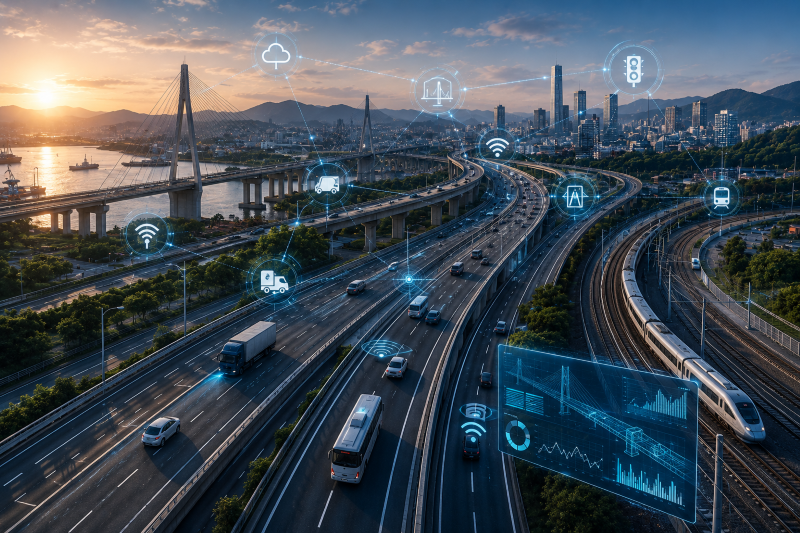
Smart Transportation Infrastructure: Building Resilient and Connected Mobility Systems
Transportation infrastructure forms the backbone of modern society, connecting people, industries, and economies through networks of roads, bridges, railways, airports, and ports. As urban populations continue to grow and climate-related challenges become more frequent, infrastructure systems must become smarter, more resilient, and more sustainable.
Emerging digital technologies—including Artificial Intelligence (AI), Digital Twins, Internet of Things (IoT), and advanced sensing systems—are transforming the way transportation assets are designed, monitored, maintained, and operated.
The Shift Toward Smart Infrastructure
Traditional transportation infrastructure has largely relied on scheduled inspections and reactive maintenance. While these methods have served the industry for decades, they often fail to identify hidden deterioration before significant damage occurs.
Smart transportation infrastructure integrates intelligent sensing technologies with real-time data analysis to continuously evaluate structural performance and operational conditions. This proactive approach enables engineers to detect anomalies early, optimize maintenance schedules, and improve long-term asset management.
Key Technologies Driving Innovation
Several advanced technologies are shaping the future of transportation infrastructure:
- Artificial Intelligence for predictive maintenance
- Digital Twin technology for virtual asset management
- Structural Health Monitoring (SHM)
- Fiber optic sensing systems
- LiDAR and drone-based inspections
- Internet of Things (IoT) sensor networks
- Building Information Modeling (BIM)
- Big Data analytics
Together, these technologies provide infrastructure owners with accurate, real-time insights into the condition of critical transportation assets.
Applications Across Transportation Networks
Smart infrastructure solutions are being implemented across a wide range of transportation systems, including:
- Highway bridges
- Urban road networks
- High-speed rail systems
- Metro and subway tunnels
- Airports
- Seaports
- Intelligent traffic management systems
Continuous monitoring helps reduce unexpected failures while improving safety, operational efficiency, and maintenance planning.
Sustainability and Resilience
Climate change, increasing traffic demand, and aging infrastructure present significant challenges worldwide.
Modern transportation systems must be designed not only for efficiency but also for resilience against:
- Earthquakes
- Flooding
- Extreme temperatures
- Heavy traffic loading
- Material deterioration
Smart monitoring technologies allow infrastructure managers to evaluate performance under changing environmental conditions and make informed decisions throughout the asset lifecycle.
Future Outlook
The future of transportation infrastructure lies in fully connected, data-driven systems capable of adapting to changing operational demands.
Artificial Intelligence will increasingly automate inspection processes, while Digital Twins will enable engineers to simulate future performance, optimize maintenance strategies, and support informed investment decisions.
As these technologies mature, transportation infrastructure will become safer, more sustainable, and more resilient for future generations.
Conclusion
Smart transportation infrastructure represents a major step toward creating reliable and sustainable mobility systems. By integrating sensing technologies, artificial intelligence, and digital engineering tools, infrastructure owners can improve safety, reduce costs, and extend the service life of critical assets.
Pontis Research Group continues to explore innovative approaches that bridge research and engineering practice to support the development of next-generation transportation infrastructure.