
Project overview
This study investigates how problematic fine-grained soils can be improved through a coordinated stabilization strategy based on lime, nano-zeolite, and controlled curing conditions. The work combines a structured experimental program with machine learning analysis to understand how multiple variables interact and to identify the most effective conditions for strength development.
The research focuses on soil resistance under five governing variables: fine-content category, lime content, nano-zeolite content, curing temperature, and curing time. Instead of evaluating each variable in isolation, the study examines the coupled behavior of the system and demonstrates that stabilized-soil performance is governed by nonlinear interaction mechanisms. This makes the study especially valuable for practical geotechnical mixture design, where the best solution depends on balance rather than on maximizing any single ingredient.
Why this research matters
Problematic soils are frequently encountered in pavements, embankments, shallow foundations, and other civil engineering applications. Their low strength, high moisture sensitivity, and volumetric instability can lead to poor performance, construction delays, and increased treatment costs.
Traditional lime stabilization is effective, but its efficiency depends strongly on mixture composition and curing conditions. The use of nano-zeolite introduces a promising supplementary material that may improve performance while supporting more optimized and potentially more efficient binder usage. By integrating laboratory testing with predictive modeling, the study provides an engineering framework that is not only scientifically robust, but also directly relevant to design practice.
Experimental program and methodology
A dataset of 370 observations was developed through a controlled experimental matrix. Soil specimens were prepared after air-drying, pulverizing, and sieving the base soil, followed by adjustment of the fine-content category and blending with the target dosages of lime and nano-zeolite. Water was added to achieve the desired consistency, and specimens were compacted into cylindrical molds with a diameter of 50 mm and a height of 100 mm.
After preparation, specimens were cured under two temperature regimes, 20°C and 40°C, for three curing durations: 7, 28, and 90 days. Unconfined compression tests were then performed under displacement-controlled loading to determine soil resistance. Peak stress, or the stress at 15% axial strain when no distinct peak was observed, was taken as the resistance value.
The data-driven phase evaluated six regression algorithms: Linear Regression, Decision Tree, Support Vector Regression, K-Nearest Neighbors, Random Forest, and Gradient Boosting. Model performance was measured through the coefficient of determination (R²), mean absolute error (MAE), and root mean squared error (RMSE). Feature-importance analysis was then used to interpret which input variables most strongly controlled resistance.
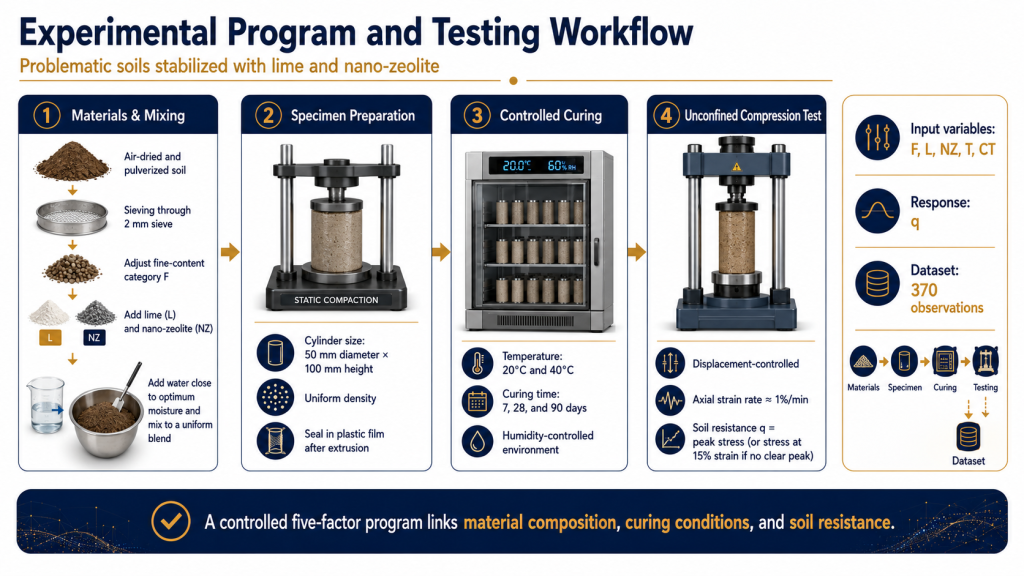
Figure 2. Experimental program and machine learning workflow used to evaluate stabilized-soil resistance.
Main findings
The experimental results show a substantial improvement in soil resistance across the tested matrix. Resistance values ranged from approximately 193 kPa to 7027 kPa, reflecting the strong influence of binder dosage and curing conditions. The mean resistance increased from 225 kPa without additives to 3402 kPa within the investigated dosage range.
Lime content emerged as the dominant compositional factor. Increasing lime dosage produced a clear increase in resistance, confirming its central role in soil modification and pozzolanic bonding. In comparison, nano-zeolite showed a weaker direct individual effect, but its contribution became important when combined with lime in balanced proportions.
Curing temperature and curing time also played major roles. Specimens cured at 40°C consistently outperformed those cured at 20°C, and longer curing periods led to progressive strength growth. The results demonstrate that strength development is governed by interaction between chemistry and curing, not by isolated variables.
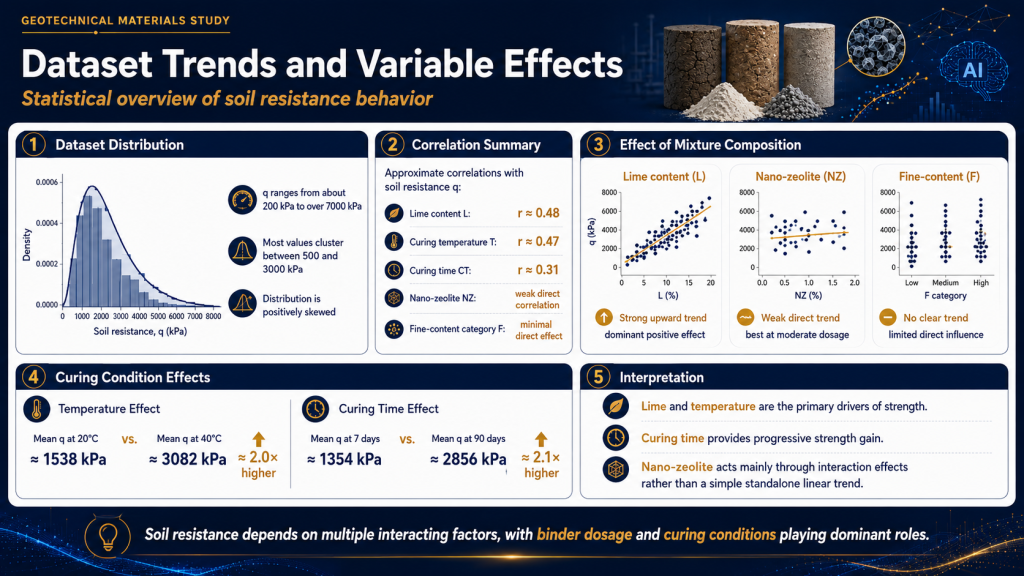
Figure 3. Statistical trends and dataset-level interpretation of resistance development.
Key numerical findings
| Indicator | Value | Interpretation |
| Experimental dataset | 370 observations | Five-factor dataset covering composition and curing variables |
| Resistance range | 193 to 7027 kPa | Large variability confirms strong interaction-driven behavior |
| Mean resistance without additives | 225 kPa | Baseline response of untreated soil |
| Mean resistance within investigated dosage range | 3402 kPa | Marked improvement due to stabilization |
| Mean resistance at 20°C | 1538 kPa | Lower curing temperature produced slower strength gain |
| Mean resistance at 40°C | 3082 kPa | Higher curing temperature significantly accelerated strength development |
| Mean resistance at 7 days | 1354 kPa | Early-age performance before full reaction development |
| Mean resistance at 90 days | 2856 kPa | Long-term curing substantially improved the stabilized soil |
| Best-performing composition zone | Lime ≈ 10–15%, nano-zeolite ≈ 8–12% | Balanced partial replacement delivered the best response |
| Best machine learning model | Gradient Boosting: R² = 0.954, MAE = 253.03 kPa, RMSE = 379.21 kPa | Highest predictive accuracy and strongest generalization |
Interaction-driven interpretation
One of the most important contributions of the study is the demonstration that soil resistance is controlled by coupled interactions. The strongest performance was observed when moderate-to-high lime content was paired with controlled nano-zeolite replacement and favorable curing conditions. In other words, nano-zeolite was most effective as a supplementary material rather than as a simple one-to-one replacement for lime.
The interaction analysis shows that excessive nano-zeolite replacement can reduce efficiency, while elevated temperature and longer curing durations amplify the positive effect of the binder system. The highest resistance values, approaching 6500–7000 kPa, were associated with lime contents of about 10–15%, nano-zeolite contents of 8–12%, curing at 40°C, and extended curing periods up to 90 days.
This interaction-based interpretation is essential for engineering practice. It shows that optimized stabilization depends on selecting the right combination of materials and curing conditions, rather than relying on a single additive target.
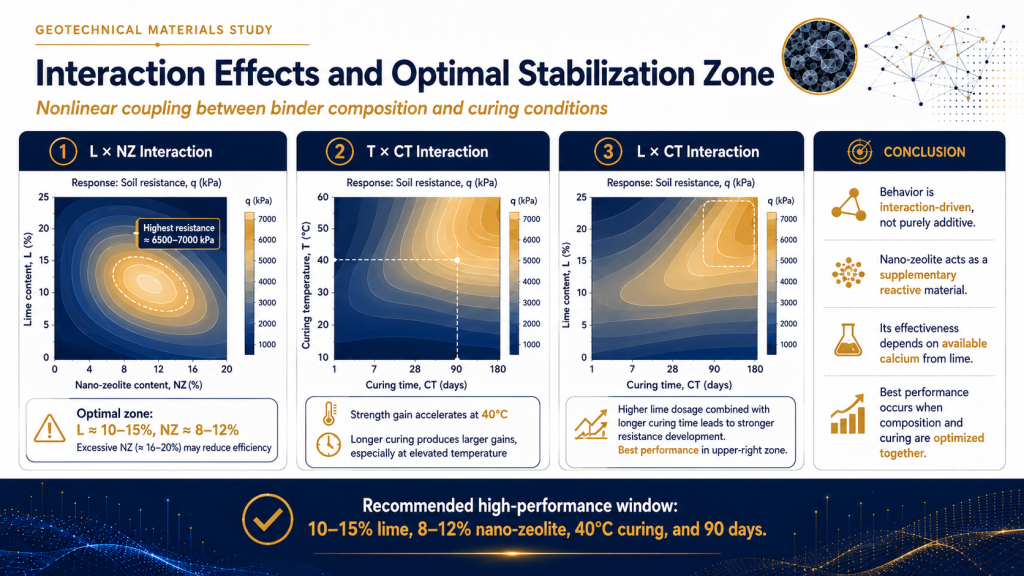
Figure 4. Interaction effects and practical stabilization zones identified from the experimental results.
Machine learning performance and interpretation
The machine learning analysis confirms the nonlinear nature of the stabilization problem. Among the six evaluated models, Gradient Boosting provided the most accurate and robust performance. Its strong agreement with measured resistance values indicates that the experimental trends can be captured effectively through a data-driven framework.
Feature-importance analysis identified lime content and curing temperature as the two most influential variables, followed by curing time and nano-zeolite content. The fine-content category had only a minor direct effect within the studied range. These findings are consistent with the statistical analysis and reinforce the reliability of the experimental interpretation.
The combination of interpretable machine learning and laboratory testing provides a powerful basis for predictive design. It allows engineers to estimate resistance outcomes more efficiently, compare stabilization scenarios, and select mixture proportions using evidence-based performance trends.
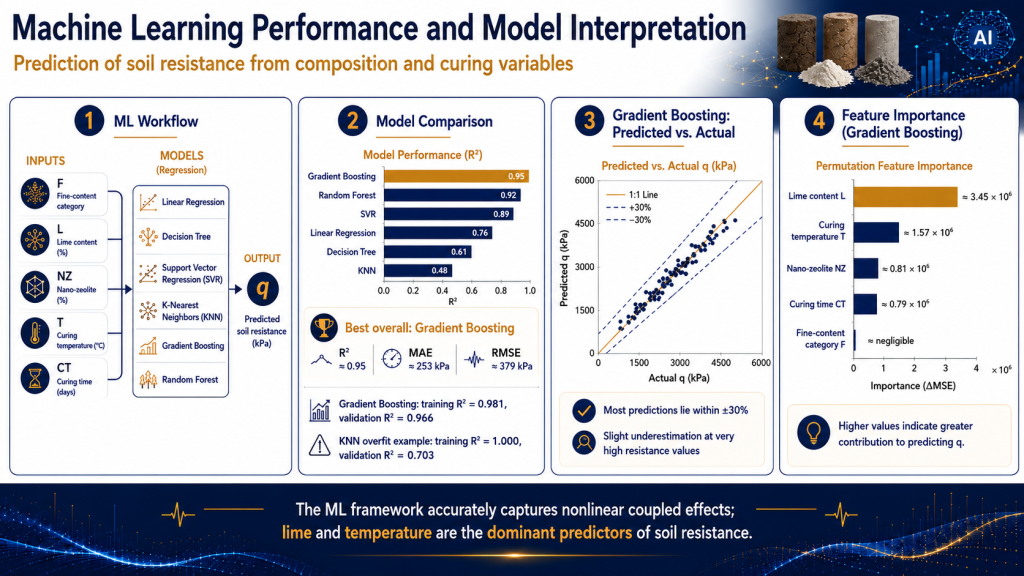
Figure 5. Comparative machine learning performance and interpretation of the best predictive model.
Engineering significance
This research provides a practical framework for improving problematic soils through balanced stabilization rather than trial-and-error material selection. It contributes to the design of stronger and more reliable soils for transportation infrastructure, foundations, and earthworks where performance depends on both material composition and curing environment.
The study is also important from a methodological perspective. By integrating systematic experimentation with explainable machine learning, it connects physical testing, statistical interpretation, and predictive modeling in a single workflow. This creates a more advanced basis for future geotechnical mixture design and supports the transition toward data-informed soil stabilization practice.
Overall, the work demonstrates that the most effective soil improvement strategy is interaction-driven: the right balance of lime, nano-zeolite, temperature, and curing time can significantly increase resistance while improving the efficiency and reliability of stabilized-soil design.