
AI-Driven Structural Optimization: A New Era in Sustainable Engineering
AI-Driven Structural Optimization: A New Era in Sustainable Engineering
Artificial Intelligence (AI) is rapidly transforming structural engineering from a discipline driven primarily by experience into one powered by intelligent data analysis and optimization. Recent research demonstrates that AI can significantly improve structural design, optimize material usage, and enhance the long-term safety of buildings and bridges.
Why This Matters
The construction industry accounts for a substantial share of global carbon emissions, with structural materials such as concrete and steel representing a major portion of a building’s environmental footprint. Engineers are therefore seeking solutions that reduce material consumption without compromising structural performance.
Modern AI algorithms can evaluate thousands of design alternatives within minutes, identifying structural configurations that are lighter, stronger, and more economical than those produced through conventional engineering workflows.
Key Research Highlights
Recent international studies reveal several important developments:
- AI-assisted topology optimization enables engineers to reduce material consumption while maintaining structural safety.
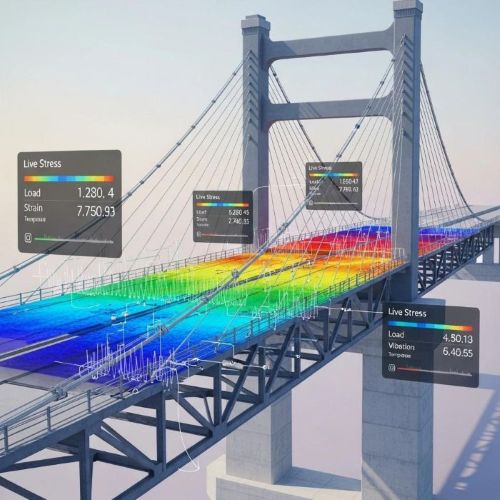
- Digital Twin technology combines sensors, BIM models, and AI to monitor structural health in real time.
- Machine learning algorithms are increasingly capable of predicting structural deterioration before visible damage occurs.
- AI-based optimization is accelerating the development of sustainable, low-carbon concrete mixtures with improved mechanical performance.
Practical Applications
Structural engineering firms are beginning to integrate AI into:
- Bridge design optimization
- High-rise building analysis
- Seismic performance assessment
- Structural Health Monitoring (SHM)
- Predictive maintenance of infrastructure
- Material optimization for sustainable construction
These technologies enable engineers to reduce project costs while improving reliability throughout a structure’s life cycle.
Sustainability Benefits
One of the most promising applications is AI-assisted low-carbon concrete design. Researchers have demonstrated that machine learning models can optimize concrete mix proportions to reduce carbon emissions while maintaining strength and durability. Some industry implementations have also reported faster strength development alongside lower embodied carbon.
Looking Ahead
As computational power continues to increase, AI is expected to become an integral component of structural engineering practice rather than an optional analytical tool. Future design workflows will likely combine BIM, Digital Twins, structural monitoring, and generative AI to create intelligent infrastructure capable of adapting throughout its service life.