
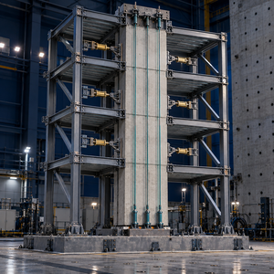
Sustainable Seismic Design for Controlled Damage Repair and Realignment Based on the JCEMA article Analytical Cases of Sustainable Seismic Design Fariborz M. Tehrani, Markar Grigorian and Fatemeh Gorji Sinaki Conceptual visualisation of a recoverable structural system. The image does not represent a completed building or a tested prototype from the source paper. Earthquake-resistant design has […]
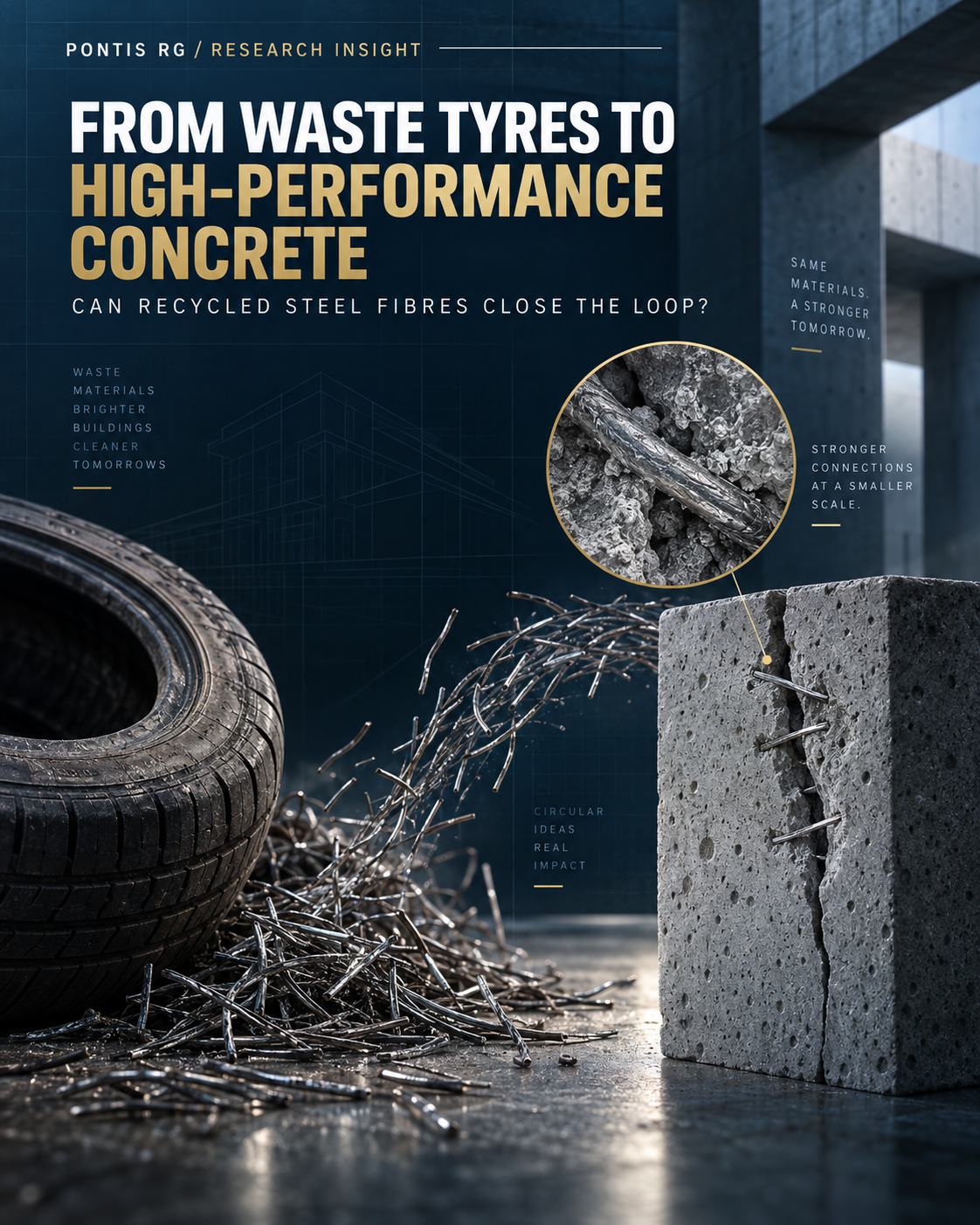
From Waste Tyres to High-Performance Concrete Can recycled steel fibres close the loop without compromising structural performance? Every end-of-life tyre contains high-strength steel. Meanwhile, fibre-reinforced concrete often depends on newly manufactured steel fibres. Bringing these two material streams together is an attractive circular-economy idea – but its success depends on engineering control, not recycled content […]

”””””””””””””””””””””””””””’ Why This Matters Concrete is one of the most important construction materials in the world, forming the backbone of bridges, buildings, tunnels, dams, foundations, and transportation infrastructure. But concrete has an unavoidable weakness: cracking. Some cracks are small and have little immediate effect on structural capacity. However, even small cracks can create pathways for […]
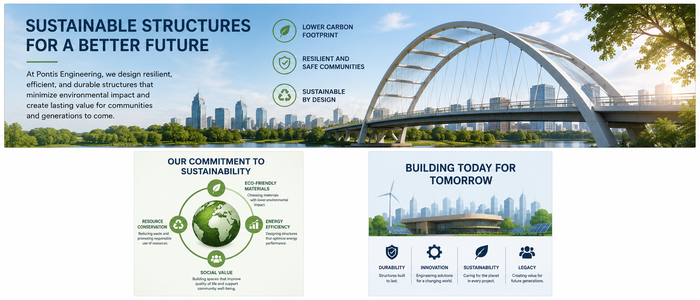
Designing resilient, durable, and responsible infrastructure for long-term value Figure 1. Engineering today for resilient and sustainable communities. Why this matters Civil infrastructure is expected to do more than carry loads. Bridges, buildings, retaining systems, and public facilities must remain safe, economical, and serviceable while also reducing environmental impact. This is changing the way […]
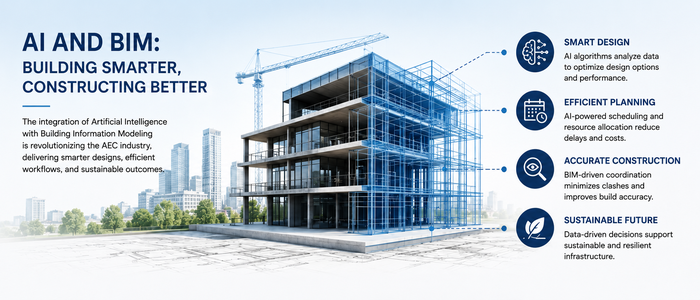
How artificial intelligence and digital models are reshaping design, coordination, and infrastructure delivery Overview Building Information Modeling (BIM) has already changed the way engineers, architects, contractors, and owners manage information. Artificial Intelligence (AI) is now adding a new layer to this process: the ability to learn from data, compare design options, detect risks earlier, and […]

Strengthening existing bridges and buildings for safer, longer-lasting infrastructure Many cities depend on bridges, buildings, hospitals, schools, and transport corridors that were designed before today’s seismic performance expectations. Replacing these assets is often unrealistic, expensive, and environmentally demanding. Seismic retrofitting offers a practical alternative: improve the behavior of the existing structure so that it can […]
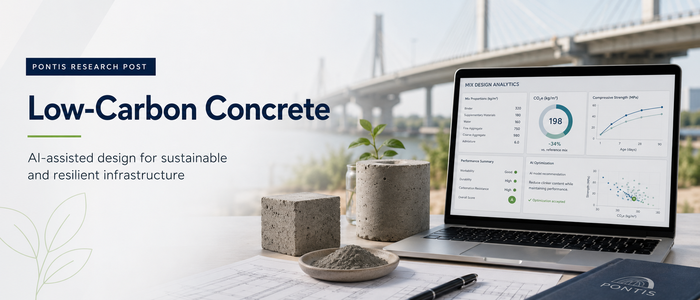
Why this topic matters Concrete will remain essential for bridges, buildings, tunnels, foundations, and transport infrastructure. The challenge is not to avoid concrete, but to use it more intelligently. Low-carbon concrete aims to reduce embodied emissions while keeping the mechanical performance, durability, and constructability that civil infrastructure requires. This is where data-driven design becomes useful. […]